


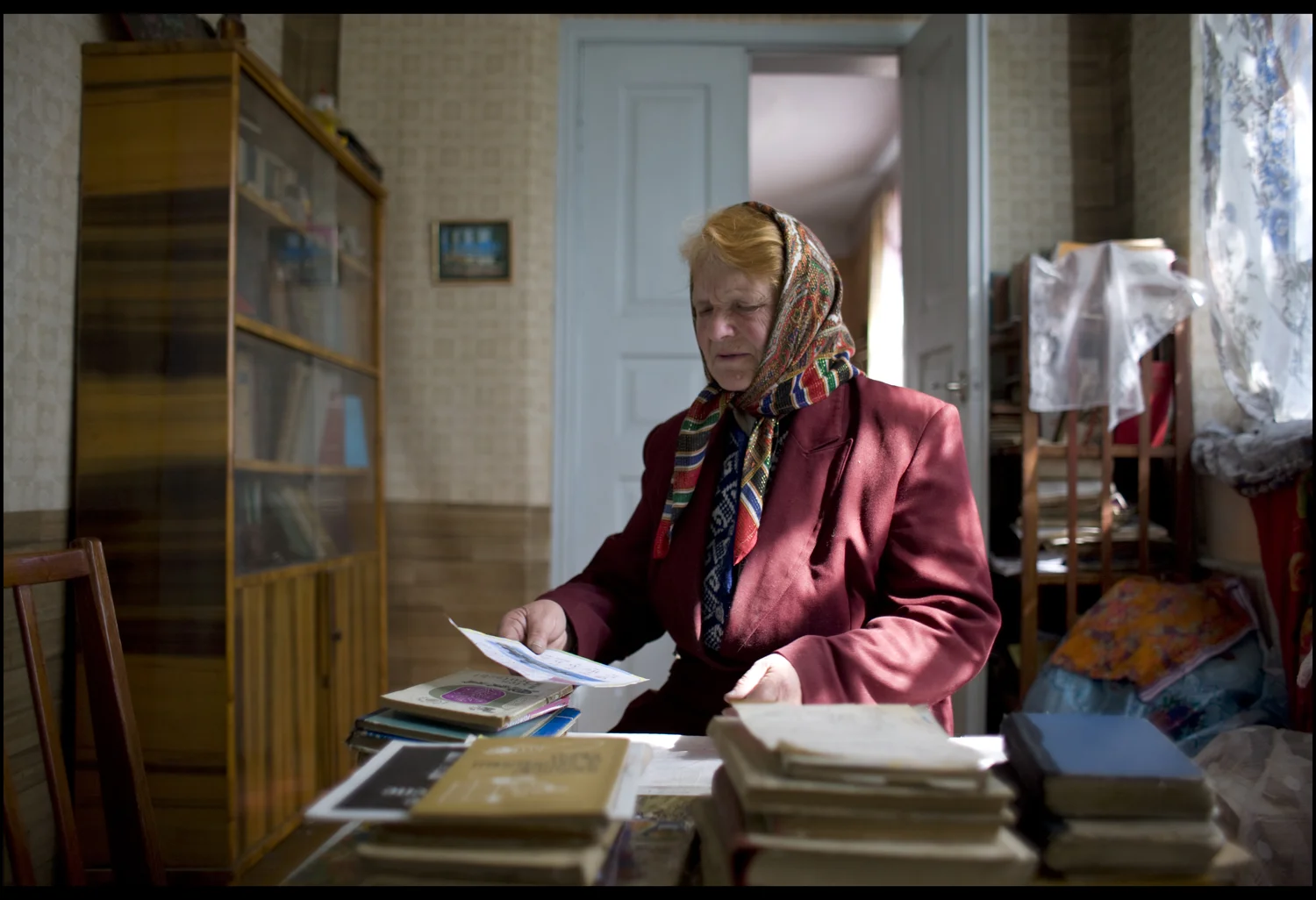


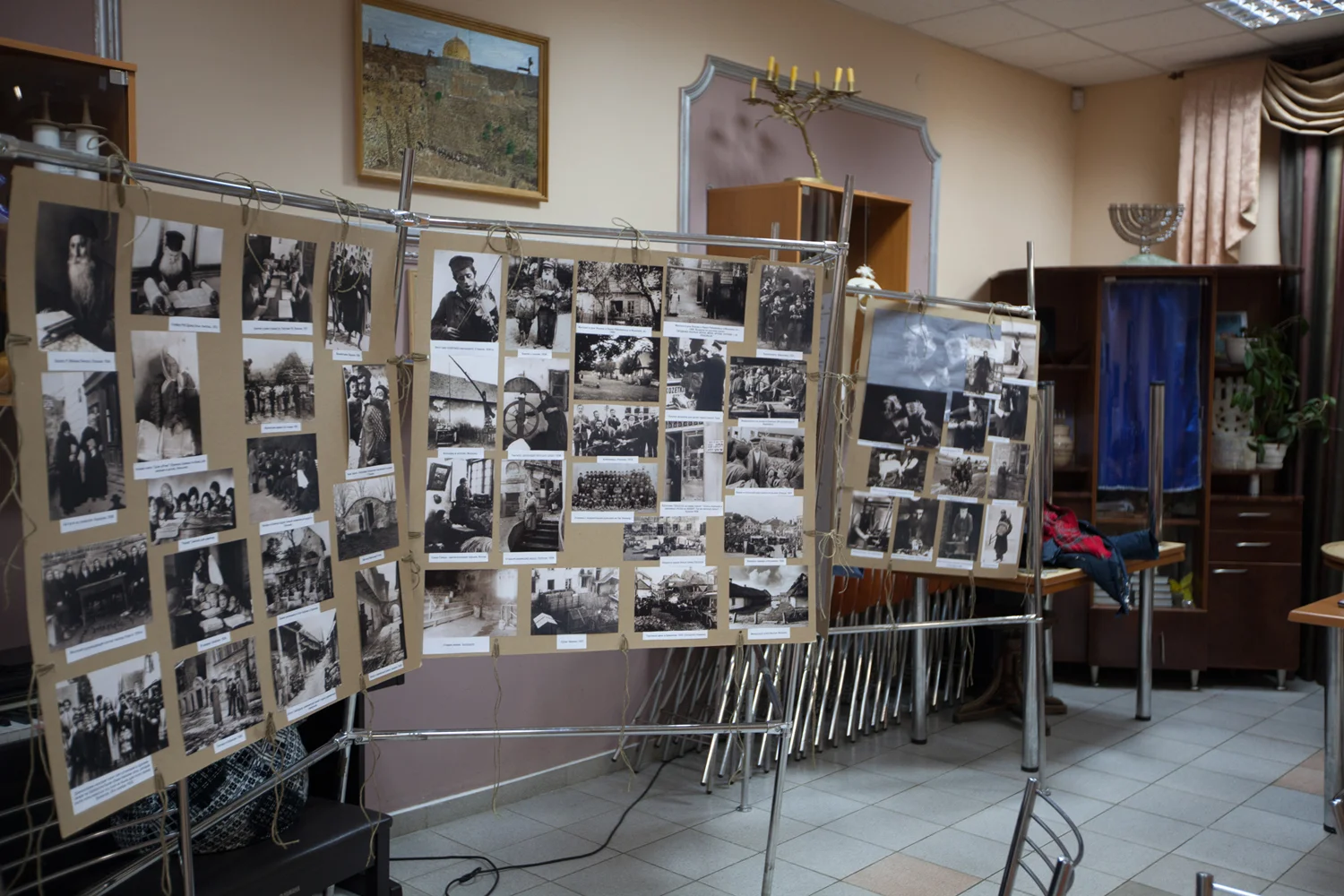


Kantor's project about Jewish presence and absence in Eastern Europe has evolved from personal biography to subjective documentary and consists of work created between 2004 and 2012 mainly in Poland and Ukraine.
During the first three years, Kantor used mainly black and white film to document places mostly representative of loss and memory. Later in the process, she began to use color, making the works highly saturated in order to convey the vivid reality of place and of endurance.
Kantor printed a part of this project using the palladium process, creating contact prints from the original un-enlarged black-and-white negatives, printed on 11 by 15 inch paper. Some are single images and others are diptychs and triptychs, which tell little stories akin to snapshots and family albums. This photographic language juxtaposed with the color and black-and-white works lends itself for a dialogue between past and present and allows for a wider look at a people and a culture.